
06 Tokenizer
主要目的是在transfermer的input embeding之前,将文本信息转变为input向量。主要有以下几种方式。(英文多采用BPE算法,双语采用SentencePiece算法)
1.分词粒度
1.1Word-based
将文本划分为一个个词。
1 | "Don't you love 🤗 Transformers? We sure do." |
优点:按照单个词分开符合人的直觉
缺点:
- 相同意思的词被分为不同token: dog,dogs
- 词表非常大(可以限制词表大小,但是这样做也会对模型的学习带来限制)
- 可能经常出现位置词UNKNOWN
2. Character-based
将文本划分为一个个字符
1 | "What is your name?" |
优点:
- 可以表示任意的英文文本
- 对英文来说不需要过大的词表
缺点: - 单个字符的信息量很低,模型性能很差(没有单词那种信息携带)
- 中文也需要很大的词表
- 相对于 word-based 来说,容易产生更长的token序列。(d_model维度)
3. Subword-based
对于常用词不应该切分,不常用的可以用词群来表示。
1 | dog |
| Subword 分词方法 | 典型模型 |
|---|---|
| BPE / BBPE | GPT、GPT-2、GPT-J、GPT-Neo、RoBERTa、BART、LLaMA、ChatGLM-6B、Baichuan |
| WordPiece | BERT、DistilBERT、MobileBERT |
| Unigram | ALBERT、T5、mBART、XLNet |
2. 四种常用的Subword-based
2.1 Byte-Pair Encoding(BPE)
主要包括两部分:”词频统计“ 和 ”词表合并“
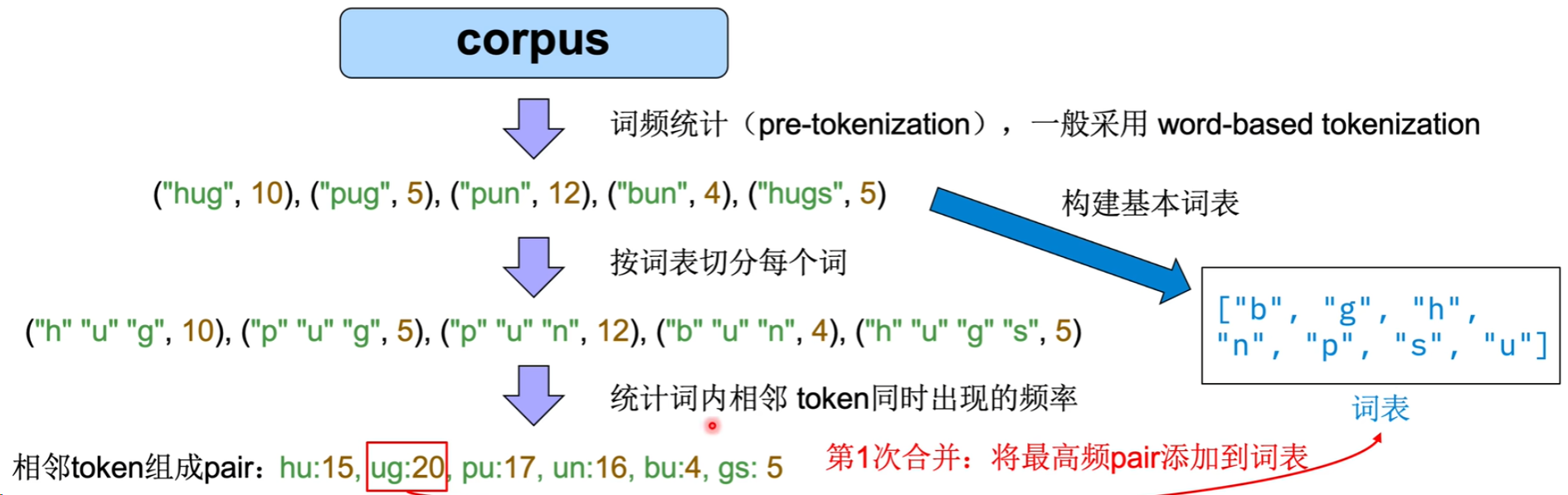
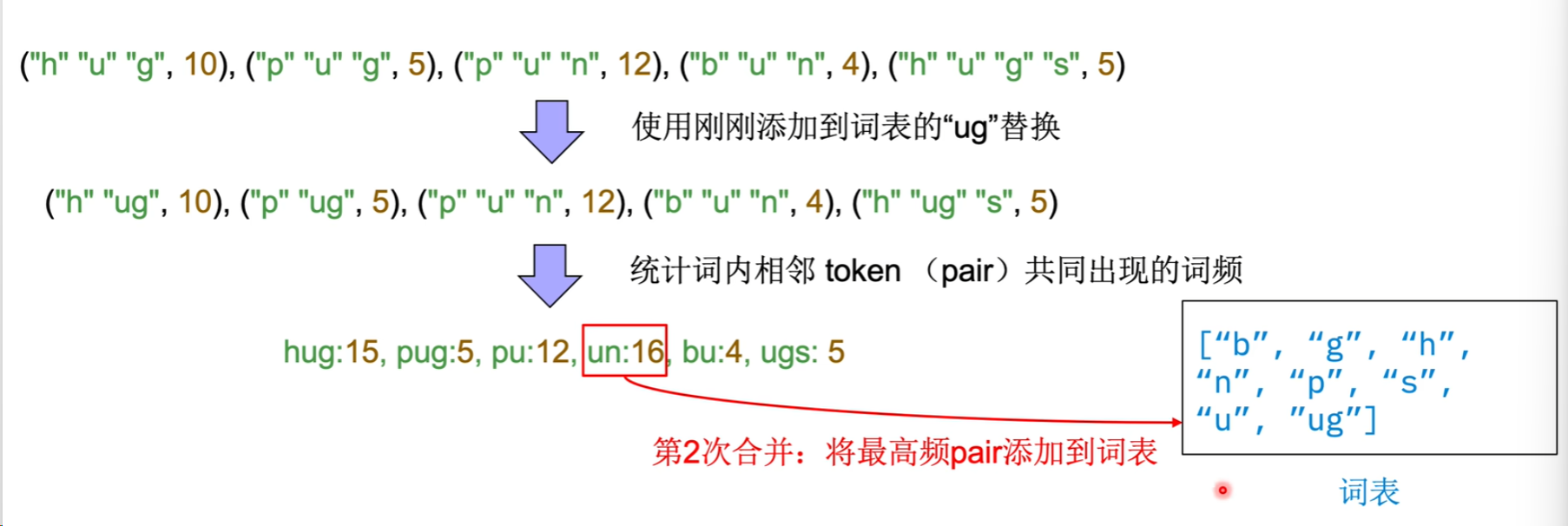
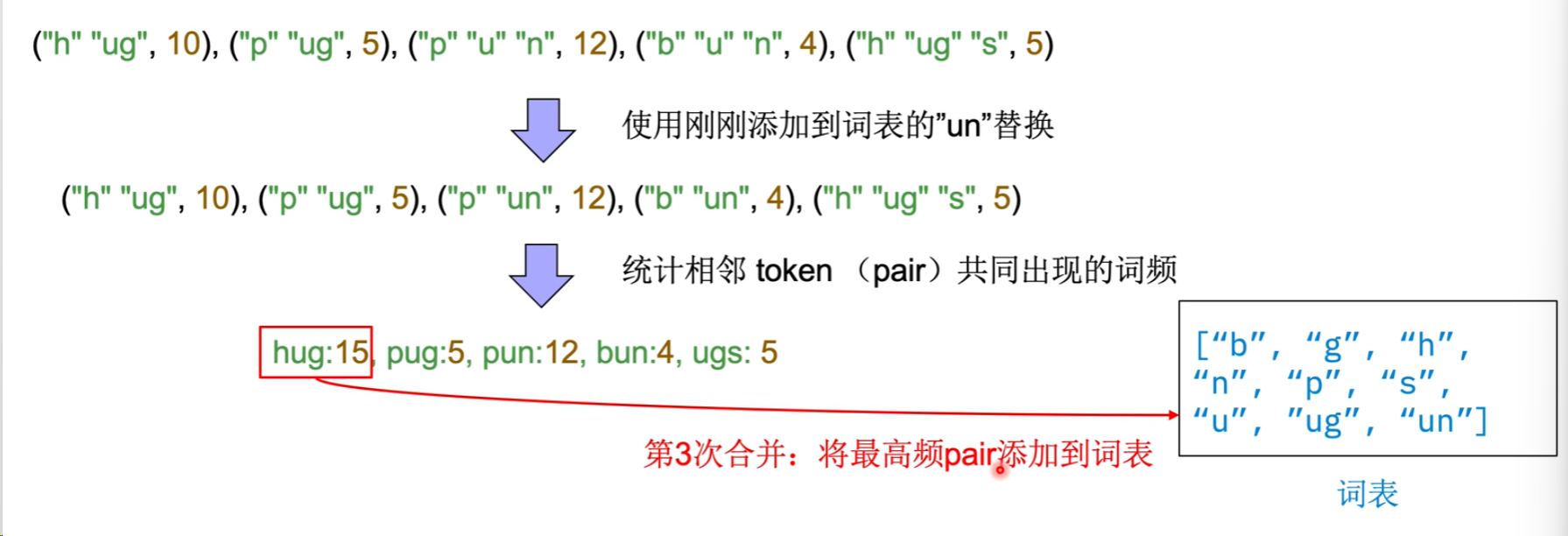
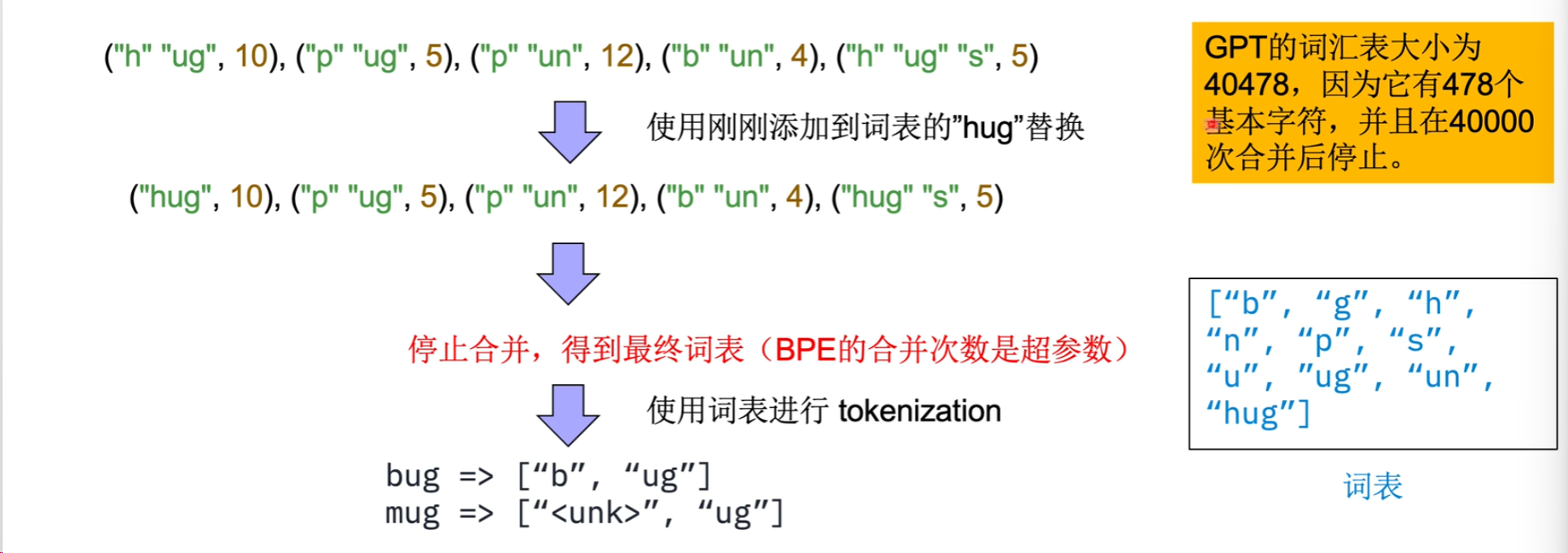
缺点:
- 包含所有可能的基本字符表可能会很大
- 对于unicode字符都视为基本字符(中文)
因此产生 Byte-level BPE:
将两个byte视为基本token,两个字节合并即可以表示Unicode
2.2 WordPiece
大体与BPE类似,
- 除第一个字母外,都会添加 ## 作为前缀(BERT)word => [w,##o,##r,##d]
使用概率大小对token进行合并,公式如下:
\frac{\text{pair出现的次数}}
$$
\text{pair得分}
{\text{token1出现的次数}\times\text{token2出现的次数}}
$$- 该算法优先考虑单个token在词表中不太频繁的pair进行合并(token1和token2不频繁,但是pair很频繁,因此合并起来非常有用)
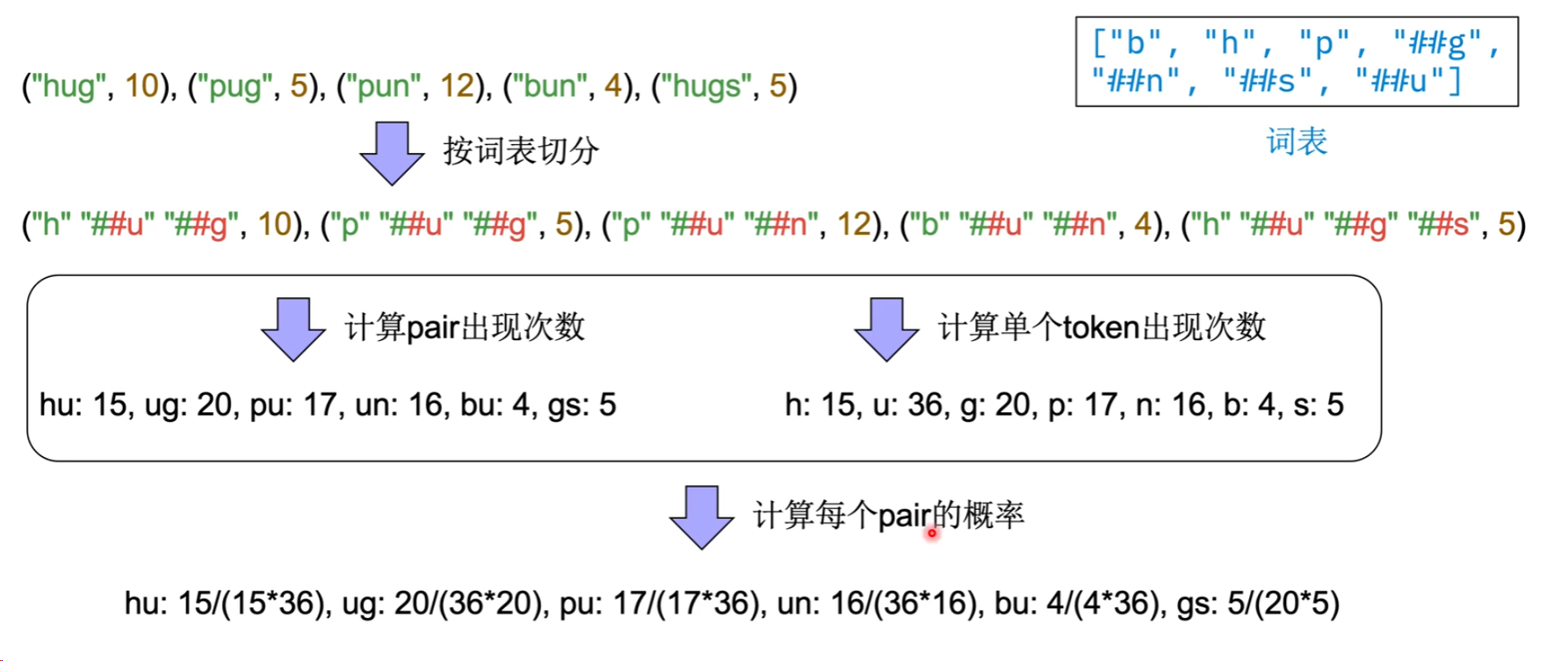
2.3Unigram
经常和 SentencePiece中使用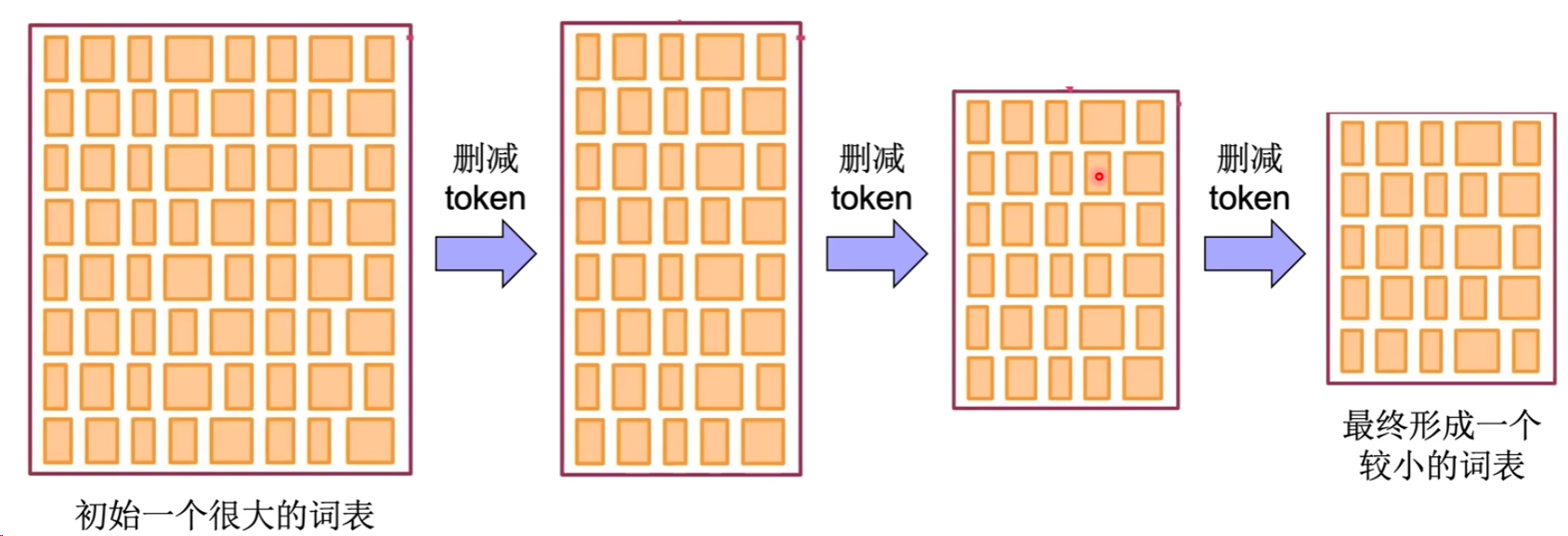
那么如何删减token?
先尝试删掉一个token,并且计算对应的 unigram loss,删除 p% 使得loss增加最少的token
先计算什么都不删除的loss,之后进行删除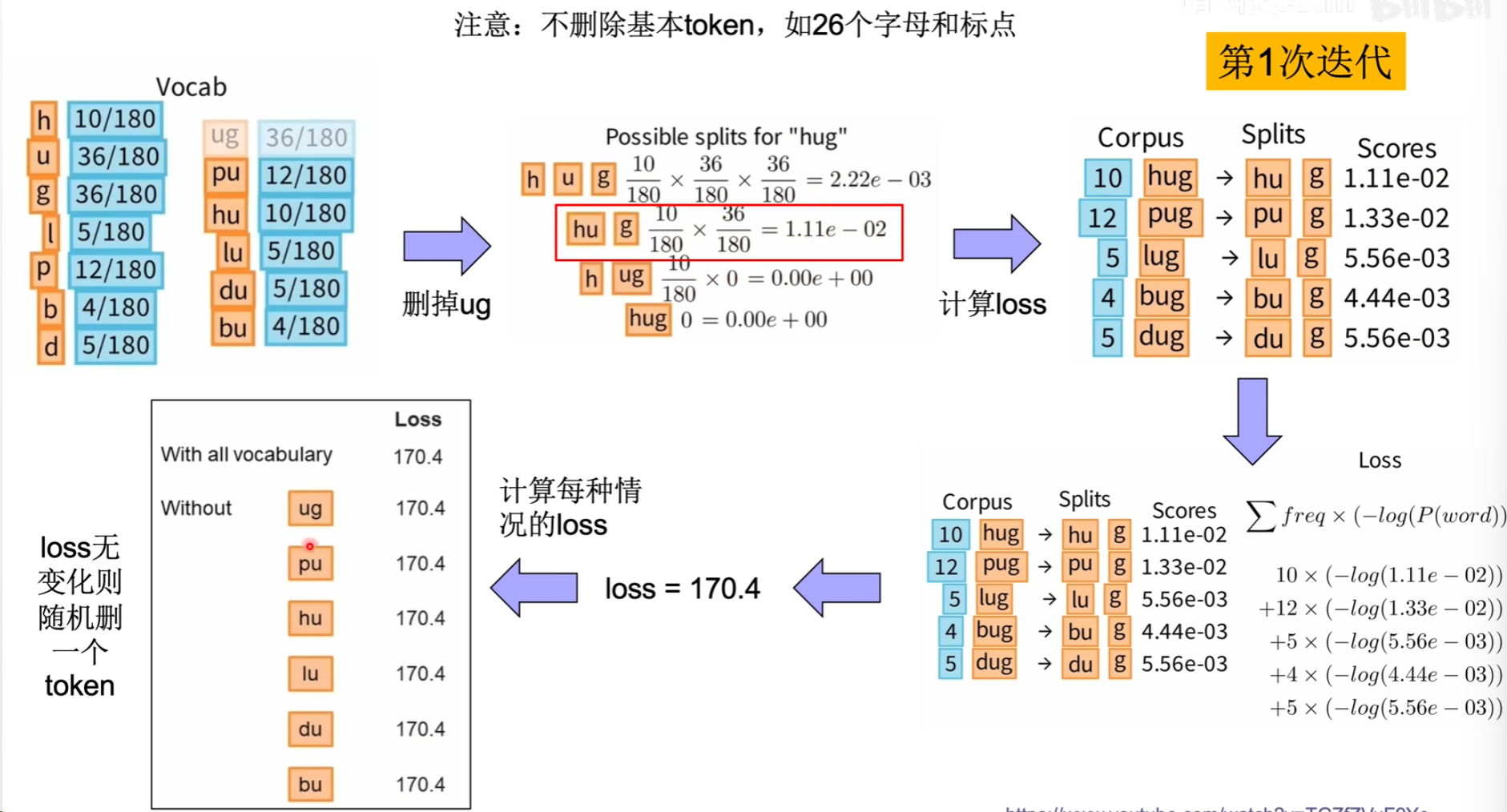
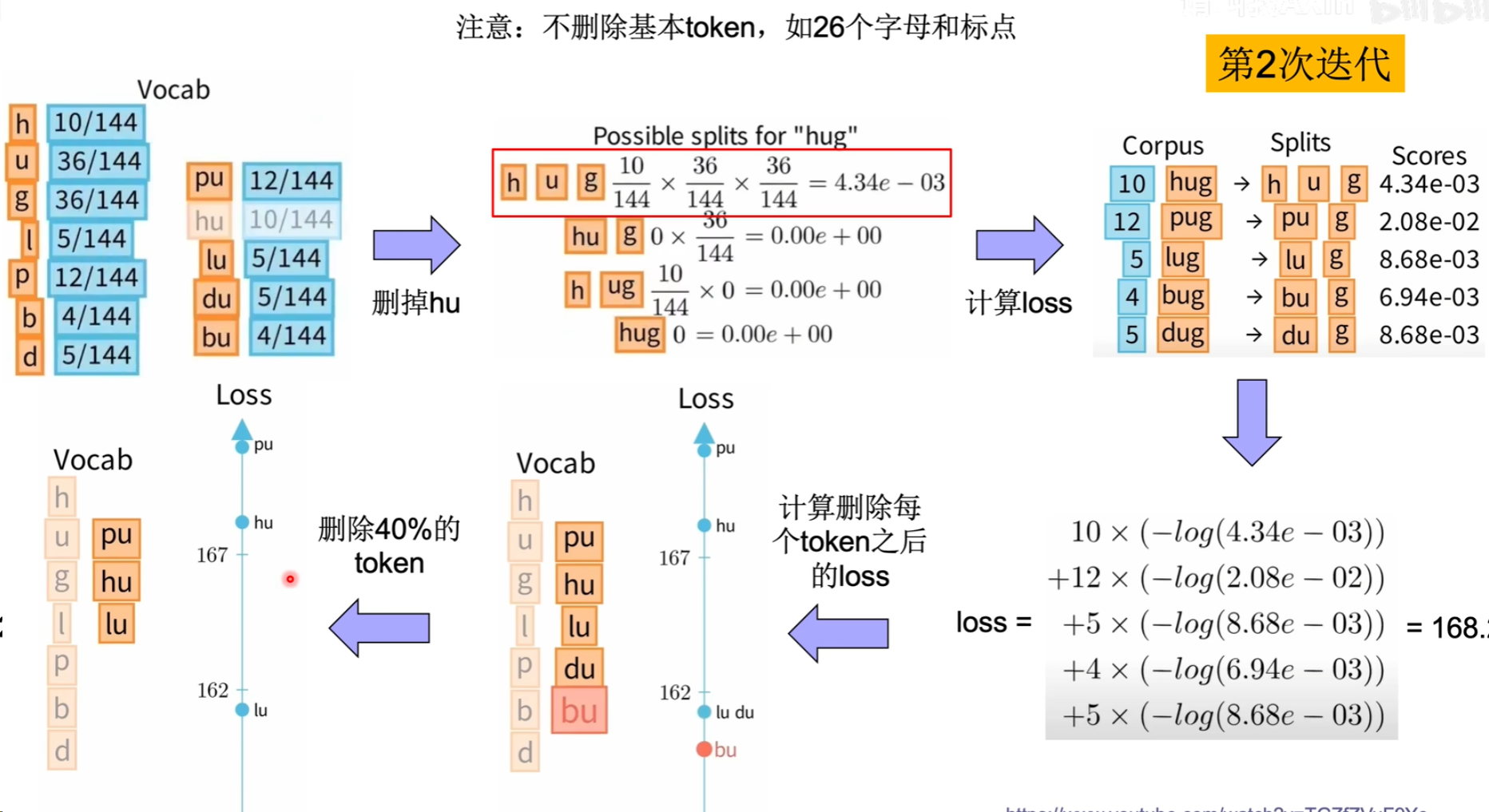
为每个单词的每一种划分是非常耗时的,采用更高效的维特比(Viterbi)算法
2.4 SentencePiece
BPE,WordPiece,Unigram的缺点:
- 并非所有语言都使用空格来分割单词
- 可以使用特定语言的 pre-tokenizer 分词,但是不通用
因此 SentencePiece - 将输入视为输入字节流(包括空格)
- 然后 Byte-level BPE 或者 unigram 算法构建适当的词汇表
SentencePiece的特点包括:
- 纯数据驱动:直接从句子中训练分词和去分词模型,不需要预先分词;
- 语言无关:将句子视为Unicode字符序列,不依赖于特定语言的逻辑;
- 多种子词算法:支持BPE和Unigram算法;
- 快速且轻量:分割速度快,内存占用小;
- 自包含:使用相同的模型文件可以获得相同的分词/去分词结果;
- 直接生成词汇ID:管理词汇到ID的映射,可以直接从原始句子生成词汇ID序列;
- 基于NFKC的规范化:执行基于NFKC的文本规范化
3. 总结
| Tokenization method | Advantages | Disadvantages |
|---|---|---|
| BPE | Allows for a large vocabulary size;Handles rare and out-of-vocabulary words well;Efficiently tokenizes subwords | May result in many subwords for a single word;Not ideal for languages without clear word boundaries |
| WordPiece | Allows for a large vocabulary size;Handles rare and out-of-vocabulary words well;Efficiently tokenizes subwords | May result in many subwords for a single word;Not ideal for languages without clear word boundaries |
| Unigram | Efficiently tokenizes subwords;Scales well for large vocabularies | May produce many subwords for a single word;Not ideal for languages without clear word boundaries |
| SentencePiece with Unigram | Can handle languages without clear word boundaries;Efficiently tokenizes subwords | May produce many subwords for a single word |
| SentencePiece with BPE | Can handle languages without clear word boundaries;Efficiently tokenizes subwords | May result in many subwords for a single word |
| Byte-level BPE | Can handle any character without out-of-vocabulary tokens;Efficiently tokenizes subwords | May result in many subwords for a single word |
| Word-level Tokenization | Simple to implement;Fewer subwords per word than other methods | May not handle rare or out-of-vocabulary words well;Not efficient for large vocabularies |
| Character-level Tokenization | Handles any word or character;Efficient for small vocabularies | May produce too many subwords for a single word;Not efficient for large vocabularies |
本博客所有文章除特别声明外,均采用 CC BY-NC-SA 4.0 许可协议。转载请注明来源 Mortal!